Vintage Culture: A Bold Display Font for Crafty Creations
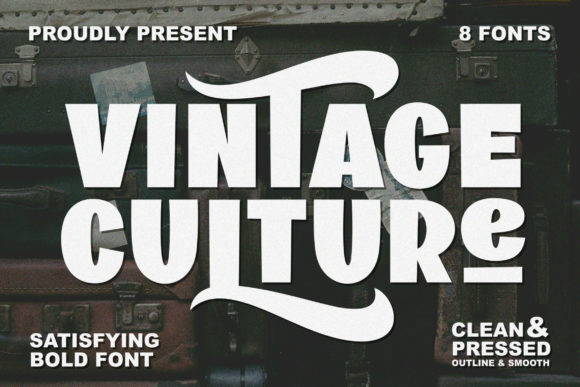
Every maker knows the feeling: you’ve poured your heart into a design, the layout is perfect, the colors are just right, but something still feels missing. More often than not, that missing piece is the right typeface. Vintage Culture is a cool, bold, and stylish display font that fills that gap beautifully. It’s the kind of lettering that stops a scroll, pulls a customer in, and makes a handmade product feel undeniably premium. Whether you’re designing candle labels, wedding signs, or a whole new line of printable wall art, this font brings a confident, character-rich voice to your work.
What makes Vintage Culture stand out isn’t just its visual punch—it’s how practical it is for real-world craft businesses. It’s PUA encoded, meaning every single alternate glyph, swash, and decorative flourish is right at your fingertips, no complicated software required. If you’ve ever struggled to access those hidden extras in a font, you’ll appreciate how smooth this feels. You can finally add that little swoosh or elegant tail to a letter on a thank-you tag or a product label without a headache. It’s a small detail that makes a huge difference in how customers perceive your work.
A Visual Personality That Sells the Story
Vintage Culture walks a fine line between nostalgic charm and modern confidence. It’s not overly distressed or grungy; it’s bold, clean, and full of presence. The letterforms carry a subtle retro spirit—think mid-century shop signage or artisanal brand marks—but they’re crisp enough to use on a glossy sticker sheet or a minimalist greeting card. This balance is gold for makers. You want a font that feels handcrafted and intentional, but you also need it to reproduce cleanly on a variety of surfaces. That’s exactly what you get here.
When you use this font on a product, it tells a story before a single word is read. On a jar of hand-poured soy wax, it whispers “small-batch quality.” On a wedding welcome board, it announces “timeless romance.” On a set of boutique clothing tags, it says “curated with care.” That emotional layer is what turns a $5 print into a $25 keepsake. It’s not just lettering; it’s a branding shortcut that helps your items feel cohesive, recognizable, and worth the price.
Where Bold Display Fonts Shine Brightest
As a display font, Vintage Culture is built for headlines, names, titles, and short bursts of text. It’s not meant for long paragraphs—and that’s exactly why it works so well for product-based businesses. When you’re labeling a jar, stamping a tote bag, or cutting vinyl for a sign, you’re usually working with a few powerful words. This font makes those words count.
Here are some of the most practical ways craftspeople can use it:
- Candle labels and product packaging: A bold product name in Vintage Culture paired with a simple scent description in a clean sans serif creates instant shelf appeal.
- Wedding invitations and stationery suites: Use it for the couple’s names on an invitation, then carry it through to escort cards, menus, and thank-you notes for a polished, coordinated look.
- Printable wall art and digital downloads: A single powerful word like “Gather” or “Home” in this font, centered on a textured background, becomes a bestseller in an Etsy shop.
- Farmhouse-style signs and home decor: Cut it from wood, etch it on acrylic, or screen-print it on canvas—the sturdy letterforms hold up beautifully at large sizes.
- Boutique tags and hang tags: Small clothing brands can use it for their logo or a signature phrase on swing tags, giving an instant “elevated small shop” feel.
- Seasonal craft designs: Think “Merry & Bright” on a holiday mug, “Boo” on a Halloween tote, or “Love” on a Valentine’s day card—the font adapts to any season while keeping its signature style.
- Planner pages and sticker sheets: Functional planner stickers with headers like “Today’s Focus” or “To Do” in this typeface feel more like a treat than a task.
For each of these, readability is key. Because Vintage Culture is bold and well-proportioned, it stays legible even when scaled down to a modest sticker or a narrow product label. The letters don’t fill in or lose their shape, which is a common frustration with script fonts that have ultra-thin hairlines. You can confidently send it to a cutting machine or a print shop and know it will look as crisp in the final product as it does on your screen.
How a Font Transforms Perceived Quality
Think about the last time you picked up a handmade item at a market. Did you notice the lettering on the tag? If it was a generic system font, the product might have felt amateurish, even if the craftsmanship was stunning. The right typeface, like Vintage Culture, flips that perception. It signals that the maker paid attention to every detail, from the stitching to the sticker. That’s how you build a brand identity that customers remember and come back to.
Consistency matters, too. When you use the same display font across your packaging, your social media graphics, and your physical signage, you create a visual thread. Your Instagram feed feels like an extension of your craft fair booth. Your thank-you card echoes the same personality as your product labels. This repetition builds trust and makes your brand feel more established, even if you’re a one-person operation working from the kitchen table. Vintage Culture’s distinct style makes that consistency easy to achieve because it’s recognizable without being overused.
Practical Readability for Cutting Machines and Small Print
If you use a Cricut, Silhouette, or other cutting machine, you already know the pain of choosing a beautiful font that turns into a weeding nightmare or a torn mess of tiny cuts. Bold, straightforward letterforms are your friend. Vintage Culture’s sturdy strokes mean you can cut it from adhesive vinyl, heat transfer vinyl, cardstock, or even thin balsa wood without worrying about delicate pieces breaking. The font holds its integrity at sizes as small as 0.5 inches for simple text, though for intricate swashes, a slightly larger size is safer. Always do a test cut, but in general, this is a machine-friendly choice.
For printed products, the story is similar. Whether you’re printing on matte label paper, glossy photo cardstock, or textured linen, those clean bold lines resist blurring and maintain high contrast. Even on a busy patterned background, the lettering stays readable. If you’re creating mockup previews for your online shop, the font photographs well—it looks substantial and intentional, never flimsy. That’s a huge advantage when your product’s first impression happens in a thumbnail image.
Font Pairing Ideas That Work Hard
A great display font rarely stands alone. Pairing it thoughtfully with a supporting typeface can elevate your entire design. For Vintage Culture, you have several winning directions:
- With a clean sans serif: This is the classic workhorse combination. Use Vintage Culture for the main headline and a simple, neutral sans serif like a modern sans serif font for the details. For a candle label, the scent name in the display font and the weight or ingredients in the sans serif creates instant hierarchy.
- With a delicate serif: For wedding stationery, pair the bold display with a light, elegant serif font for the body text. The contrast between the confident, chunky letters and the refined, airy serif feels both romantic and grounded.
- With a relaxed handwritten font: A more casual look emerges when you use a friendly handwritten font for secondary text. This works beautifully for a kitchen sign or a chalkboard-style printable where you want warmth without sacrificing readability.
- With a flowing script: If you want to highlight a single word, try setting a name or a key phrase in a graceful script font and everything else in Vintage Culture. The balance of fluid swashes and solid block letters is visually arresting—perfect for a wedding welcome sign or a storefront logo.
The key is to let Vintage Culture do the heavy lifting for attention-grabbing text, while the paired font handles the quieter, functional information. This not only looks professional but also makes your designs easier to read at a glance.
Unlocking the Full Potential: Alternates, Swashes, and PUA Encoding
One of the most exciting features of this premium font is what you get beyond the standard alphabet. Vintage Culture is PUA encoded, which means you can access all of its alternate glyphs, ligatures, and swashes without needing professional design software. In programs like Silhouette Studio, Cricut Design Space, or even basic word processors, you can use Character Map (Windows) or Font Book (Mac) to grab those extra special characters. Want a letter with a swooping tail? A slightly different lowercase ‘a’ or a decorative flourish? It’s all there.
These alternates are a goldmine for product creators. They allow you to customize each design so that no two projects look exactly alike. For a set of name place cards, you can use a different swash variation for each guest’s name. For a line of t-shirts, you can tweak the lettering on each size tag or color variant. Small touches like this make your work feel bespoke, not mass-produced. That’s a huge selling point for customers who want something unique.
The file formats typically include OTF and TTF, which cover most design software and cutting machines. Many fonts in this category also offer multilingual support for extended Latin characters, so if you sell internationally or create products in languages like French, Spanish, or German, you’ll likely have the accents and special characters you need. Always check the font’s character map to confirm, but the PUA encoding is a strong indicator of a well-stocked typeface.
Commercial Use and Protecting Your Business
If you’re selling physical products, digital downloads, or client work, the licensing terms of a font are non-negotiable. You can’t just grab any freebie and use it on a mug you’re selling—that’s a fast track to legal trouble. The good news is that Vintage Culture is designed with creators in mind. It falls into the category of commercial font licenses that typically allow you to use it on products you sell, whether it’s a printed poster, a cut file, a sublimation design, or a wedding invitation template you deliver to a client.
Always double-check the specific license agreement that comes with your purchase, but generally, fonts like this are intended for both personal and commercial use. Some may have restrictions on embedding the font in editable templates or apps, so if you create digital products where the end user can type their own text, you’ll want to confirm that is allowed. For most crafters making finished physical goods, static printables, or flattened design files, you’re in the clear. This peace of mind lets you design boldly and sell confidently, knowing your hard work is protected.
Real-World Projects That Feel Immediately Doable
Let’s get specific. Imagine you’re a small shop owner gearing up for the holiday season. You’ve been making cinnamon-scented soy candles and you want to rebrand them for gift-giving. You design a label with “Spiced Chai” in Vintage Culture, set against a warm cream background. Beneath it, you add “Hand-poured in small batches” in a simple sans serif. The label looks like it belongs in a high-end boutique. You wrap the candle in kraft paper, tie it with twine, and attach a round tag with the same font reading “Merry & Bright.” The whole package becomes a gift itself—and customers notice.
Or picture this: you’re a wedding invitation designer working on a suite for a couple who loves that rustic-chic aesthetic. You set their names in Vintage Culture, add a delicate ampersand swash, and pair it with a light serif for the date and venue. You carry the same font onto the welcome sign, the table numbers, and the favor tags. The result is a cohesive, magazine-worthy look that gets you tagged in every guest’s Instagram post. That’s the power of a creative font that works across multiple formats.
Even for everyday projects—a teacher’s classroom decor, a birthday party banner, a set of pantry labels for a friend—this font lifts the ordinary into the memorable. It’s not about being fancy; it’s about being intentional. And when you’re intentional, your customers feel it.
Crafting with Confidence in Every Letter
What makes Vintage Culture a true asset for makers isn’t just its good looks. It’s the way it fits into a real workflow. You can open it up, type out a name, adjust a swash, and send it to your cutting machine in minutes. You can use it on a product label today and a social media graphic tomorrow, and it will look equally at home. You can build a whole brand identity around its bold, friendly bones, or just sprinkle it in for seasonal collections. The font doesn’t demand a steep learning curve or expensive software—it just shows up and does the heavy creative lifting.
For crafters, Etsy sellers, and handmade business owners, finding a typeface that’s both beautiful and practical can feel like a unicorn. But this one checks all the boxes: bold enough to stand out, versatile enough to use everywhere, and packed with the extras that make a design feel custom. If you’ve been looking for a display font that can handle product labels, signs, stickers, and more without losing its personality, you’ve found it. Add it to your favorite creations, and watch how a few well-chosen letters can transform a simple project into something that sells.